Strong judgment misses less. Strong judgment reduces rework.
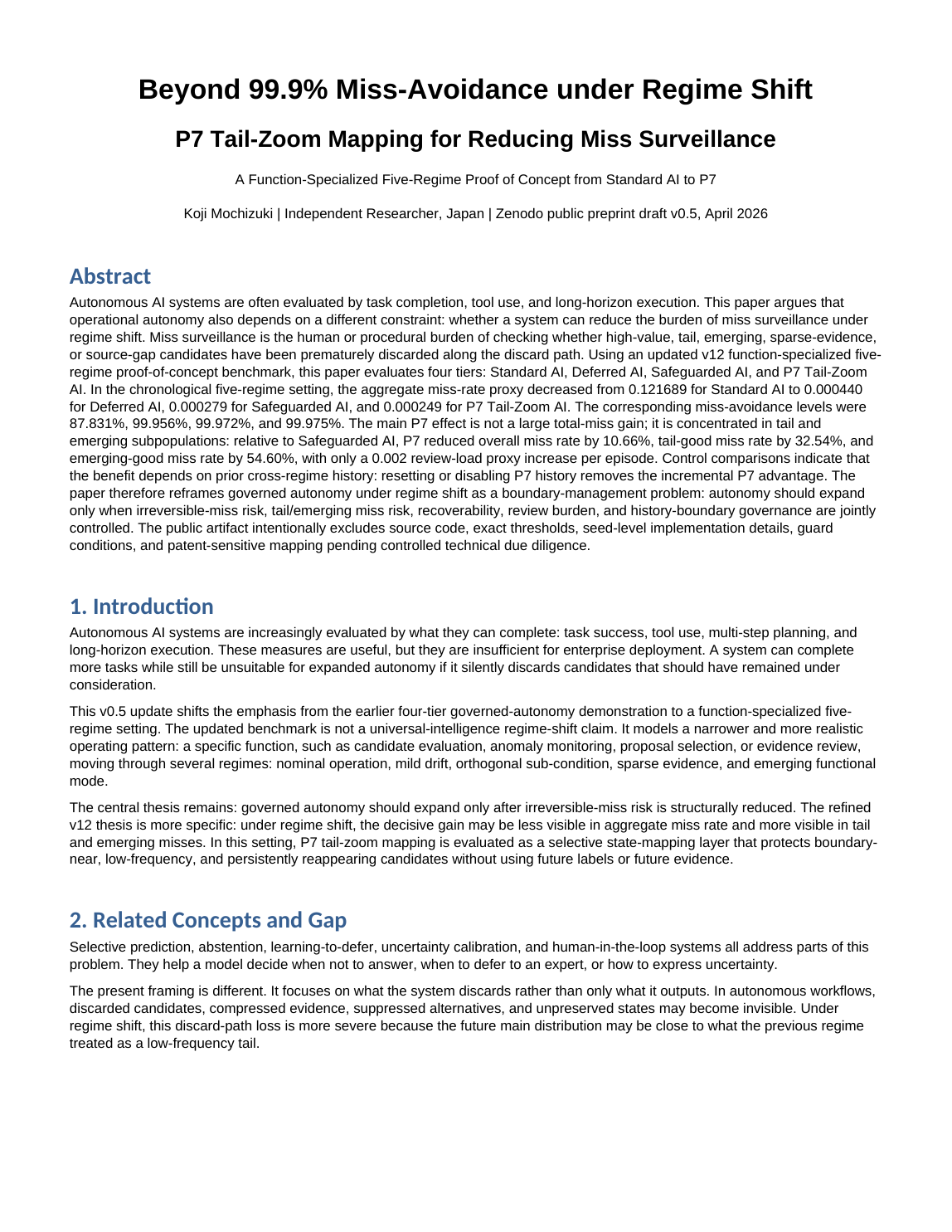
Two bounded POC signals: missed-risk suppression in the public v12 benchmark, and workflow-loop reduction in a separate synthetic workflow POC.
Miss less. Converge with less rework.
These numbers come from different bounded POC settings and are labeled separately to avoid implying a single universal benchmark.
Strong judgment misses less.
Missed-risk rate proxy for P7 Tail-Zoom AI in the defined chronological five-regime POC. Equivalent miss-avoidance: 99.975%.
Strong judgment reduces rework.
Rework loops versus the baseline workflow. The synthetic sales-stage POC described about one-fifth the baseline loop count, including repair plus re-evaluation / confirmation.
Public chronological v12 summary.
| Tier | miss_rate | miss_avoidance | suppression vs standard | tail_good_miss | emerging_good_miss | review_load | latency_ms_est | complexity_x |
|---|---|---|---|---|---|---|---|---|
| Standard AI | 0.121689 | 87.831% | 1.0x | 0.546617 | 0.474647 | 0.000 | 42 | 1.0 |
| Deferred AI | 0.000440 | 99.956% | 276.7x | 0.059825 | 0.013557 | 7.900 | 65 | 1.5 |
| Safeguarded AI | 0.000279 | 99.972% | 436.2x | 0.025508 | 0.008200 | 8.050 | 118 | 2.4 |
| P7 Tail-Zoom AI | 0.000249 | 99.975% | 488.2x | 0.017208 | 0.003723 | 8.052 | 121 | 2.8 |
Source: Table 1 of the public v0.5 POC preprint. “latency_ms_est” and “complexity_x” are the paper’s benchmark fields and should not be read as production guarantees.
The public paper includes the full figures and controls.
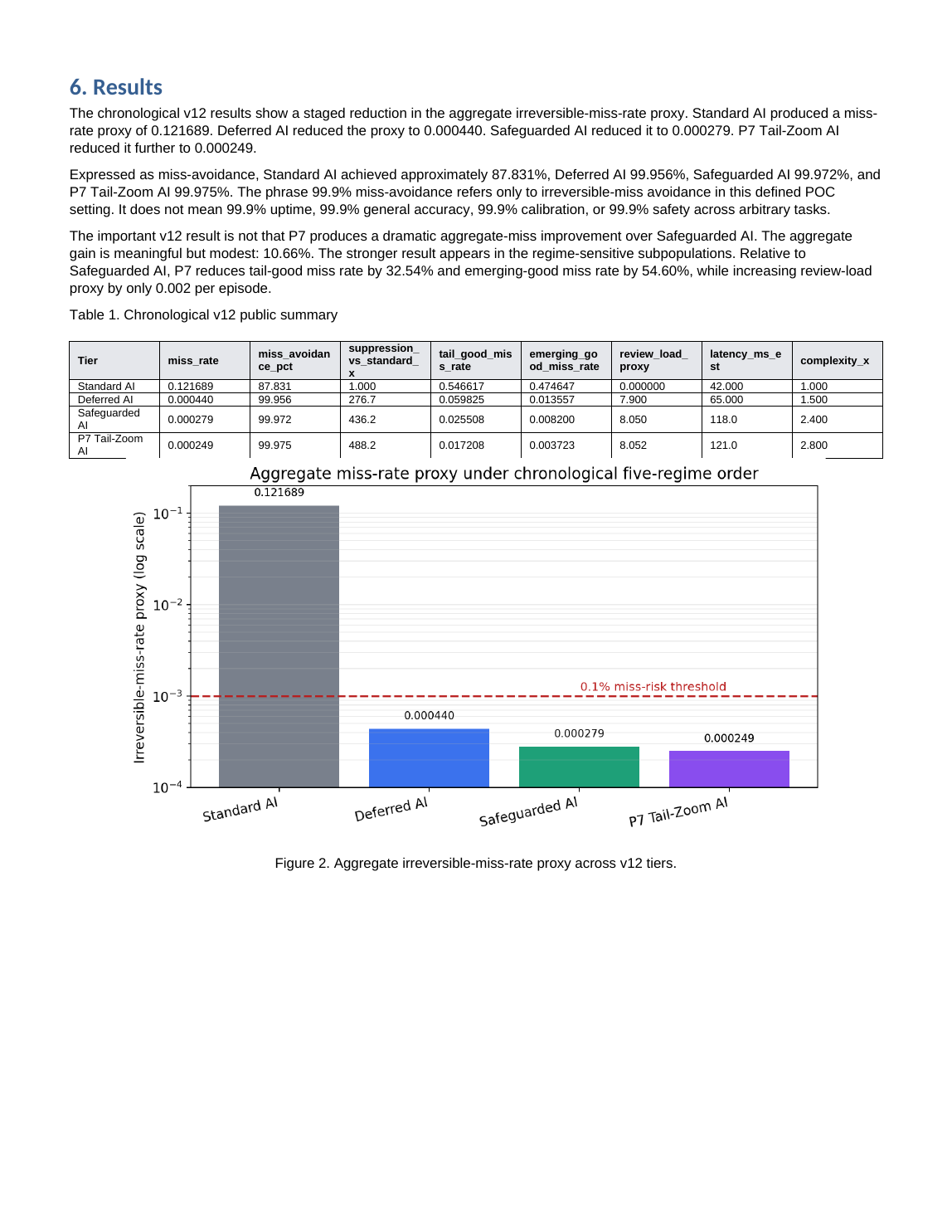
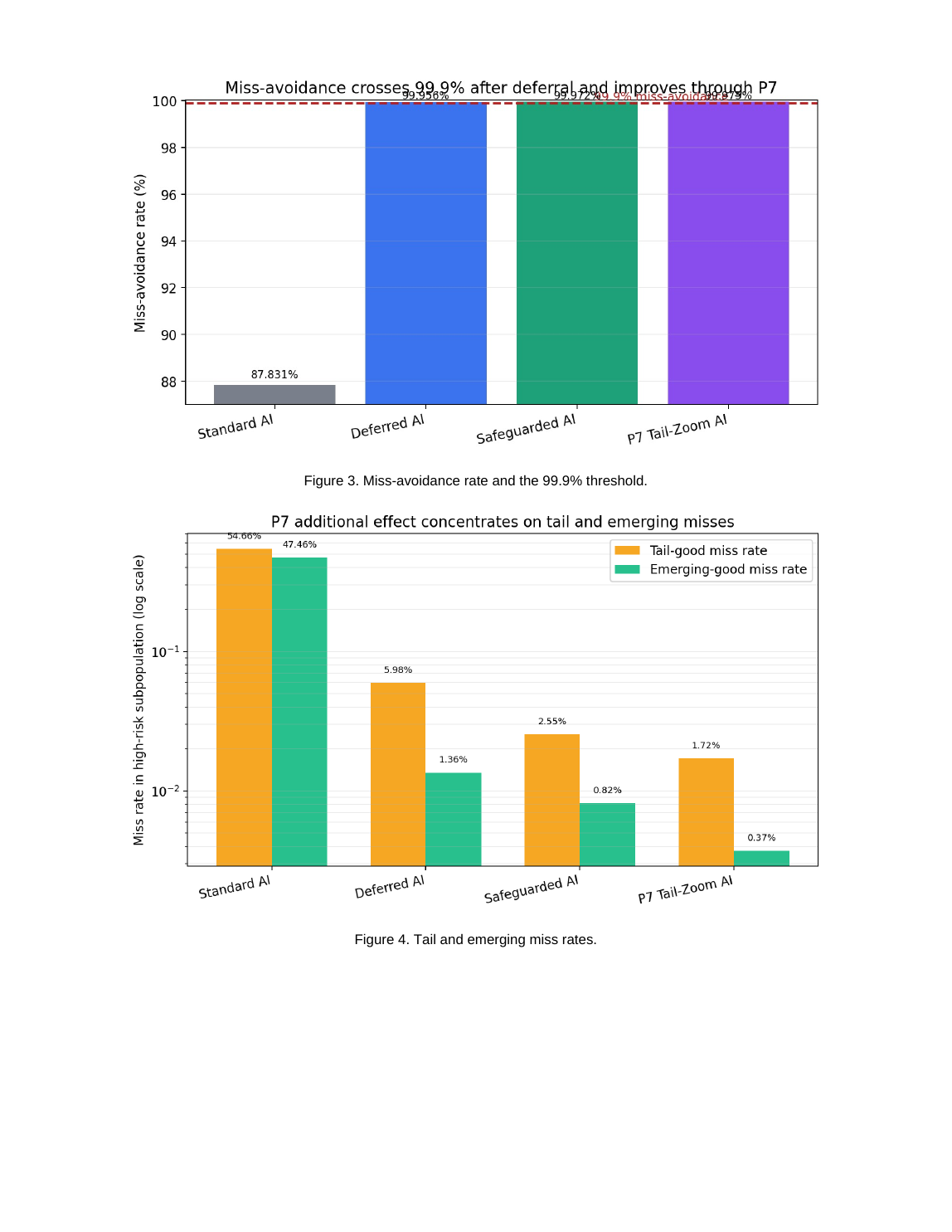
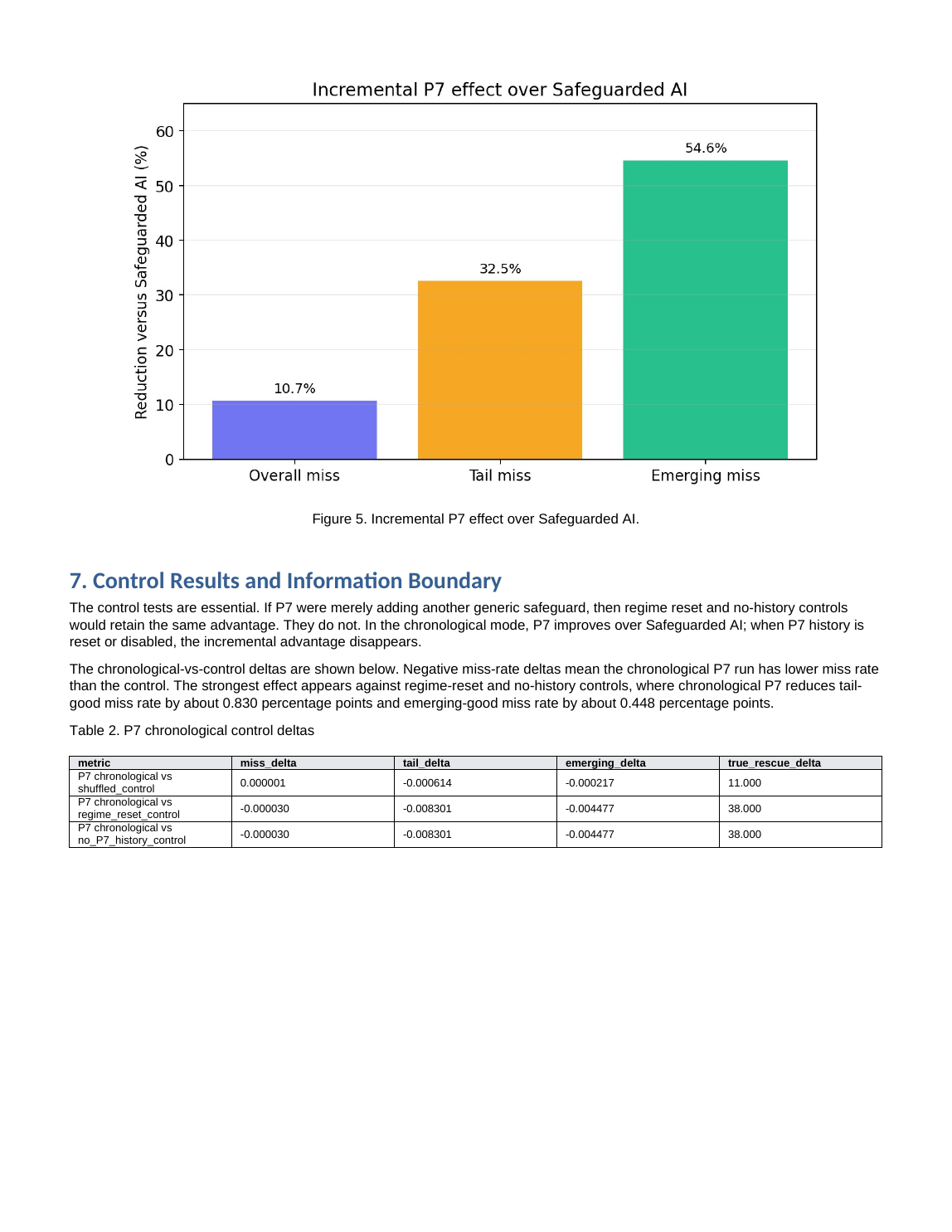
Judgment value appears in both misses and rework.
Miss fewer critical cases
The public v12 benchmark supports selective preservation and re-evaluation of low-frequency, boundary-near, and emerging candidates rather than indiscriminate review of everything.
Reduce unresolved residue
The synthetic workflow POC links fewer missed issues with fewer unresolved residues and fewer correction loops. It is a mechanism-level sales signal, not a production guarantee.
Keep the tradeoff visible
Review load, latency, retained state, and Human Gate requirements remain part of the decision. Strong judgment is not free and does not eliminate final accountability.